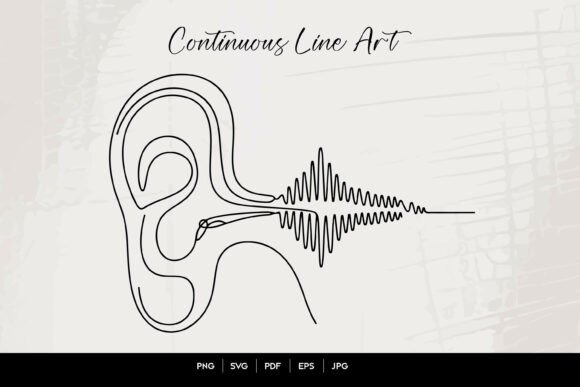
Evaluating an Ear Sound Wave Design for Embroidery Projects
In the world of embroidery, a file is just a digital blueprint until you put thread to fabric. Today, I'm looking at the Ear Sound Wave Line Art Illustration from a purely practical standpoint—as a designer who needs to know if this graphic can translate into a compelling, stitchable product. This isn't about abstract appreciation; it's about judging its performance on a hoop, its appeal on a finished product, and its potential in a handmade business.
The Immediate Mood and Visual Personality
The first impression is one of clean, intellectual connection. The continuous line drawing that merges an ear with a sound wave creates a graphic that feels both scientific and artistic. It’s a smart, modern symbol. There's no fussy detail, which is a significant advantage for embroidery. This design inherently suggests themes of hearing, music, audio engineering, communication, and healthcare, particularly ENT fields. It doesn’t shout; it communicates with a quiet confidence. That visual personality means it won’t work for every project, but for the right one, it will feel perfectly curated and intentional.
A Natural Fit for Specific Real-World Projects
Let’s ground this in a real scenario. Imagine you're preparing a custom embroidered tote bag for a client who is an audiologist opening a new clinic. They want a branded, professional-looking gift for their staff. This design isn't just a random graphic; it becomes a perfect, meaningful logo. The clean lines would translate beautifully into a satin stitch border on the bag’s front panel.
Beyond that specific case, this illustration naturally belongs to a category of thoughtful, personalized products. It would be excellent on:
- Apparel for creatives: A simple, black running stitch version on the pocket of a musician’s sweatshirt or a podcast host’s t-shirt.
- Niche home decor: As a single, elegant element on a pillow cover for a home studio or a kitchen towel in a music-loving household.
- Professional merchandise: As a small, refined patch on caps or aprons for hearing aid specialists or audio technicians.
- Personalized gifts: Embroidered on a blanket or baby item for someone deeply connected to sound, like a new parent who is a composer.
- Digital product sellers: The provided file formats like SVG and PNG are crucial for creating printable mockups to sell the design itself or as part of a crafted brand asset pack.
Where Stitching This Design Requires Careful Planning
While the design is elegant, its successful embroidery depends on mindful execution. The continuous line and the merge of two concepts mean some areas could become tricky.
You must be cautious on:
- Very small hoop sizes: If you reduce this too much for a tiny baby garment or a cap’s curved surface, the connection point between the ear and the wave might lose clarity and become a blob of stitches.
- Textured or stretchy fabrics: A lofty sweater or a thin, stretchy t-shirt will require the right stabilizer to keep those clean lines from distorting. A fill stitch in the sound wave area, if present, could puckered on thin fabric.
- Dark fabric backgrounds: The design’s appeal relies on line clarity. On dark fabrics, you’d need to choose a high-contrast, likely lighter thread color and possibly adjust stitch density so the lines remain sharp and readable.
- Products needing frequent washing: For items like kitchen towels or often-worn apparel, a dense stitch area in the waveform could be a wear point. A simpler running stitch outline might be more durable long-term.
Impact on Customer Perception and Product Value
How does using this design affect your customer or client? For a crafter or small business owner, that’s the bottom line. When stitched well, this design elevates a product from generic to specialized. It speaks directly to a niche audience, which increases perceived value. A customer looking for an “audio waveform art” gift sees it and instantly recognizes it as made for them—that builds trust and engagement.
For commercial projects, it offers brand consistency for businesses in audio or hearing health. The handmade presentation of embroidery adds a tactile, premium layer to the digital graphic, making it feel more like a crafted asset than a standard logo print. Its giftability is high because it’s symbolic and personal, not decorative. It shows professional thoughtfulness.
Practical Designer Notes Before You Hoop the Fabric
Before you commit this to a client’s order or your next craft fair batch, here’s my checklist from the embroidery machine side.
- Always test on scrap fabric first. Use the same material and weight as your final project. See how the lines translate, especially any potential tight corners or detail merges.
- Check thread color contrast thoroughly. View the design in black and white mockups. On a light background, a dark grey or navy might be more sophisticated than pure black. On a dark background, a crisp white or metallic thread could be stunning.
- Review the stitch density in your software. Depending on the file format you use (like the SVG or EPS provided), examine how the design is built. Is the wave meant to be an outline or a filled area? Adjust density accordingly to avoid fabric distortion.
- Confirm the effective hoop size. Don’t assume. Hoop it digitally at your intended size and inspect the smallest elements. Will they stitch cleanly?
- Use proper stabilizer. This is non-negotiable for maintaining the design’s geometric integrity, especially on apparel or stretchy fabrics.
- Clarify licensing for commercial use. The product description lists multiple graphics formats, which is ideal for digital product sellers. However, before selling finished embroidered items or the files themselves, you must confirm the licensing terms included with the Ear Sound Wave Line Art Illustration. This is a critical step for any craft business or Etsy seller to operate ethically.
The Final Verdict for Makers and Entrepreneurs
The Ear Sound Wave Line Art Illustration is a specialized tool in your embroidery design toolkit. It’s not a universal, all-purpose graphic. Its value lies in its precise symbolism and clean execution. For projects targeting music, audio, hearing, or communication themes, it’s a resonant and professional choice. Its success hinges entirely on your embroidery technique—respecting fabric, size, and stitch choices. When applied thoughtfully, it transforms from a simple line drawing into a meaningful, stitched story on your handmade product, personalized gift, or small shop merchandise. That transformation, after all, is the real craft.